
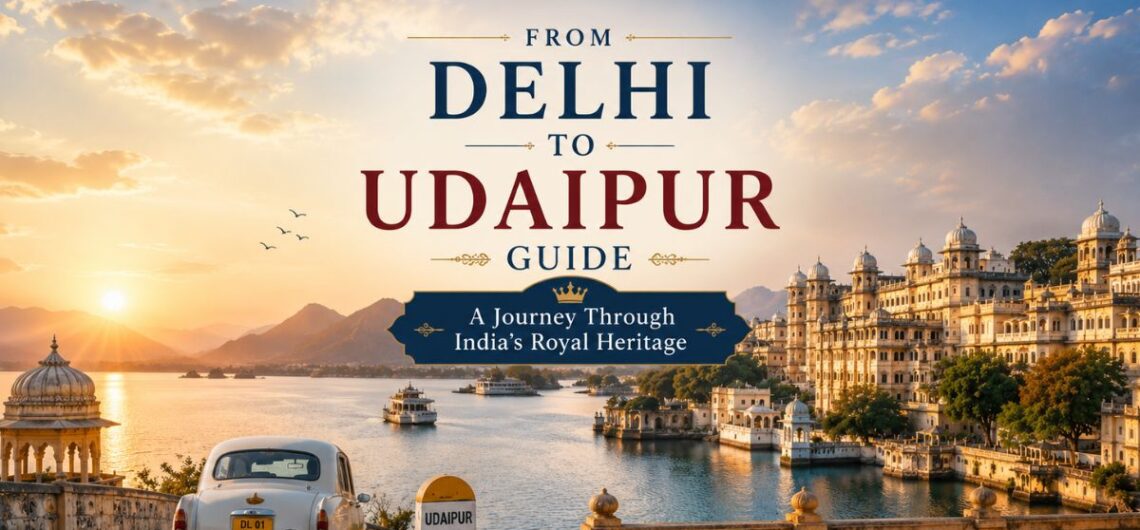
India is a land of countless stories, ancient kingdoms, magnificent monuments, and vibrant cultures. While every region of the country has something unique to offer, few travel experiences can match the historical richness of a journey from Delhi to Udaipur. This route takes travelers through some of India’s most iconic cities, where Mughal emperors, Rajput kings, and royal dynasties left behind extraordinary architectural masterpieces and cultural traditions.
For many international visitors, Delhi serves as the gateway to North India. The capital city introduces travelers to centuries of history, from Mughal monuments and bustling bazaars to colonial-era landmarks and modern attractions. Many tourists begin their exploration with an Old and New Delhi Private Guided Tour by Car, allowing them to discover both the historic charm of Old Delhi and the grand avenues of New Delhi before continuing toward Rajasthan’s royal cities.
As the journey unfolds, travelers encounter the timeless beauty of Agra, the royal grandeur of Jaipur, the mighty forts of Jodhpur, and the romantic lakes of Udaipur. Together, these destinations create one of India’s most rewarding heritage travel experiences.
Delhi: The Historical Gateway to North India
Delhi is not just India’s capital city; it is a living museum where centuries of history coexist with modern life. Over the years, numerous dynasties and rulers have shaped the city, leaving behind monuments, markets, and cultural traditions that continue to attract travelers from around the world.
Exploring Old Delhi
Old Delhi offers an unforgettable glimpse into India’s Mughal past. The narrow streets, crowded markets, and historic landmarks create an atmosphere unlike anywhere else.
One of the most famous attractions is Jama Masjid, one of the largest mosques in India. Built by Emperor Shah Jahan, the mosque remains an architectural masterpiece and an important place of worship.
Nearby, Chandni Chowk offers a sensory experience filled with colorful shops, traditional sweets, spice markets, and street food. Walking through these historic lanes provides insight into daily life in one of India’s oldest marketplaces.
The Red Fort, another UNESCO World Heritage Site, stands as a symbol of Mughal power and architectural excellence. Its massive red sandstone walls and elegant interiors continue to impress visitors centuries after its construction.
Discovering New Delhi
New Delhi presents a completely different side of the city. Designed during the British colonial period, it features wide boulevards, government buildings, and iconic landmarks.
Popular attractions include:
- India Gate
- Rashtrapati Bhavan
- Humayun’s Tomb
- Qutub Minar
- Lotus Temple
These sites reflect different chapters of India’s history and contribute to Delhi’s unique identity.
Why Delhi Is the Perfect Starting Point
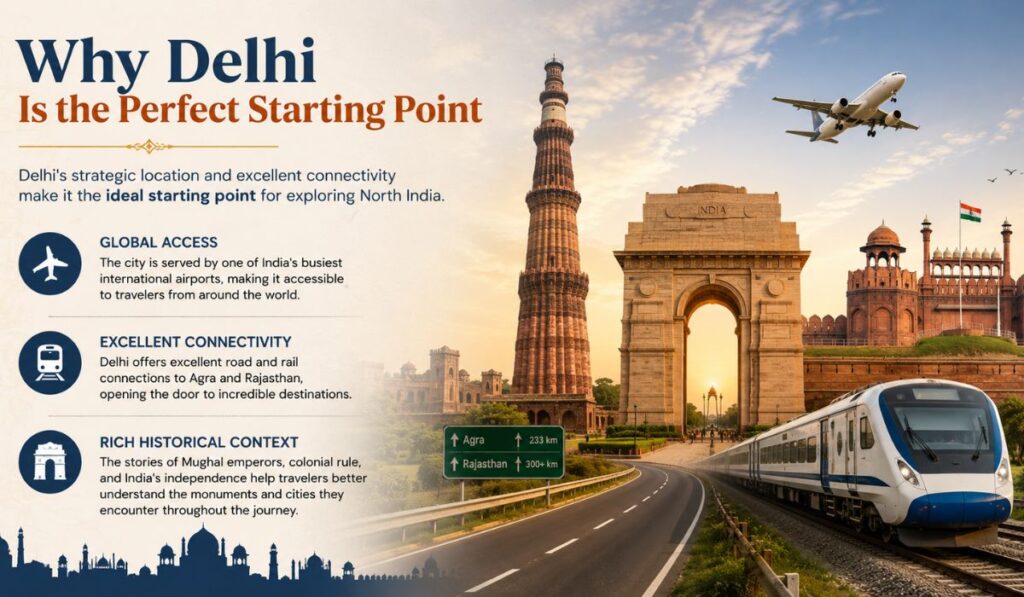
Delhi’s strategic location and excellent connectivity make it the ideal starting point for exploring North India.
The city is served by one of India’s busiest international airports, making it accessible to travelers from around the world. It also offers excellent road and rail connections to Agra and Rajasthan.
Beyond convenience, Delhi provides important historical context for the destinations that follow. The stories of Mughal emperors, colonial rule, and India’s independence help travelers better understand the monuments and cities they encounter throughout the journey.
Agra: The City of the Taj Mahal
The next destination is Agra, a city synonymous with Mughal architecture and timeless beauty.
Located on the banks of the Yamuna River, Agra served as the capital of the Mughal Empire during some of its most influential years.
The Taj Mahal
No discussion of Agra is complete without mentioning the Taj Mahal.
Built by Emperor Shah Jahan in memory of his wife Mumtaz Mahal, the monument is widely regarded as one of the most beautiful buildings ever constructed.
The white marble mausoleum combines Persian, Islamic, and Indian architectural elements to create a masterpiece that attracts millions of visitors every year.
Sunrise and sunset are particularly popular times to visit, as changing light conditions transform the appearance of the marble.
Agra Fort
Agra Fort provides a fascinating contrast to the Taj Mahal.
This UNESCO World Heritage Site served as the primary residence of Mughal emperors before the capital moved to Delhi. Its impressive walls, elegant palaces, audience halls, and defensive structures reveal the power and sophistication of the empire.
The fort also tells the story of Shah Jahan’s imprisonment by his son Aurangzeb. From Musamman Burj, visitors can see the Taj Mahal in the distance, creating one of the most emotional connections between two historical landmarks.
Mehtab Bagh
Located across the river, Mehtab Bagh offers some of the best views of the Taj Mahal.
The garden provides a peaceful atmosphere and is particularly popular among photographers seeking unique perspectives of the monument.
Jaipur: Rajasthan’s Royal Welcome
After Agra, travelers enter Rajasthan, India’s most colorful and culturally rich state.
The first major destination is Jaipur, famously known as the Pink City.
Founded in 1727 by Maharaja Sawai Jai Singh II, Jaipur combines royal heritage, architectural beauty, and vibrant local culture.
Amber Fort
Amber Fort is one of Rajasthan’s most spectacular attractions.
Perched on a hill overlooking Maota Lake, the fort features:
- Grand courtyards
- Decorative gateways
- Mirror work halls
- Royal chambers
- Scenic viewpoints
The blend of Rajput and Mughal architectural styles makes Amber Fort a must-visit destination.
City Palace
The City Palace remains one of Jaipur’s most important landmarks.
Part of the complex is still occupied by the royal family, while other sections house museums displaying royal costumes, weapons, artwork, and historical artifacts.
Hawa Mahal
Known as the Palace of Winds, Hawa Mahal is one of Jaipur’s most recognizable structures.
Its unique façade contains hundreds of small windows that allowed royal women to observe city life without being seen.
Jaipur Markets
Jaipur is also famous for its traditional markets.
Visitors can shop for:
- Handmade jewelry
- Textiles
- Block-printed fabrics
- Blue pottery
- Traditional handicrafts
The city’s markets provide an authentic glimpse into Rajasthan’s artistic heritage.
Why This Heritage Route Is So Popular
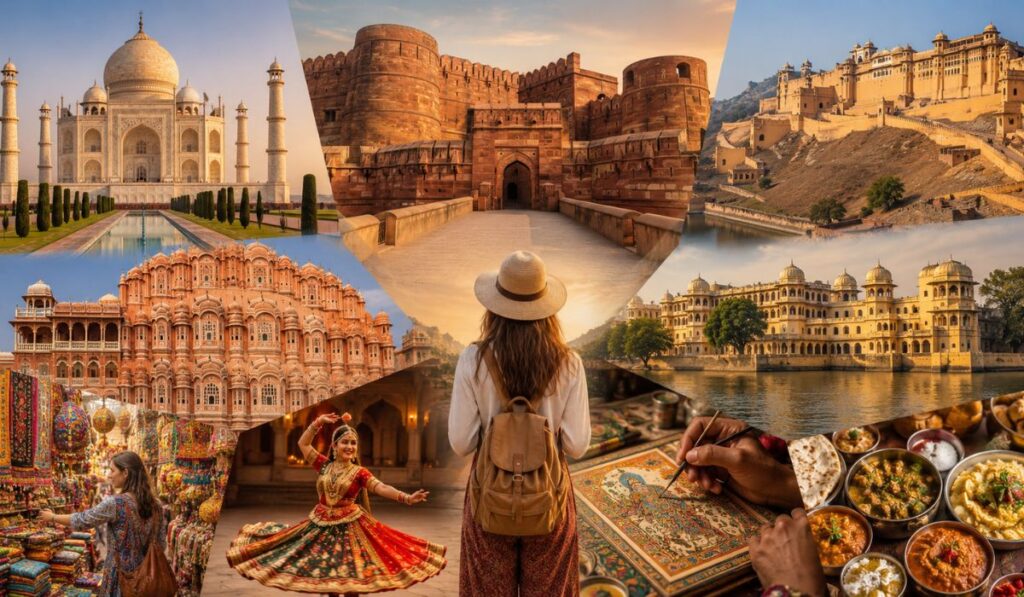
One reason this route attracts so many travelers is the incredible variety it offers.
In a single journey, visitors experience:
- Mughal architecture
- Rajput palaces
- Historic forts
- UNESCO World Heritage Sites
- Traditional markets
- Cultural performances
- Diverse cuisines
- Local traditions
This combination creates a travel experience that feels both educational and unforgettable.
For travelers seeking a comprehensive exploration of North India’s most iconic destinations, the Delhi Agra Jaipur Jodhpur Udaipur Tour remains one of the most popular and rewarding itineraries available.
Jodhpur: The Blue City
The journey continues to Jodhpur, one of Rajasthan’s most visually striking cities.
Known as the Blue City, Jodhpur is famous for its blue-painted houses, historic architecture, and vibrant culture.
Mehrangarh Fort
Mehrangarh Fort dominates the city’s skyline and is widely regarded as one of India’s greatest forts.
Standing atop a rocky hill, the fort offers breathtaking views and houses:
- Royal palaces
- Museums
- Courtyards
- Art collections
- Historic weaponry
The fort’s architecture and preservation make it one of Rajasthan’s most impressive landmarks.
Jaswant Thada
Often referred to as the Taj Mahal of Marwar, Jaswant Thada is a beautiful marble memorial built in honor of Maharaja Jaswant Singh II.
Its peaceful gardens and intricate carvings make it a popular stop for visitors.
Clock Tower Market
Jodhpur’s bustling market district provides opportunities to explore local culture and purchase traditional Rajasthani products.
The vibrant atmosphere reflects the city’s rich heritage and strong community spirit.
Udaipur: The Romantic City of Lakes
The final destination on this heritage journey is Udaipur.
Often described as India’s most romantic city, Udaipur is famous for its lakes, palaces, and scenic landscapes.
Surrounded by the Aravalli Hills, the city offers a peaceful contrast to the busy streets of Delhi and Jaipur.
City Palace Udaipur
The City Palace is one of Rajasthan’s largest palace complexes.
Built over several centuries, it features:
- Courtyards
- Balconies
- Museums
- Decorative interiors
- Lake views
The palace showcases the artistic and architectural achievements of the Mewar dynasty.
Lake Pichola
A boat ride on Lake Pichola is one of Udaipur’s most memorable experiences.
The lake is surrounded by historic palaces, temples, and ghats that create a stunning visual landscape.
Visitors can enjoy spectacular sunset views while learning about the city’s history.
Jag Mandir
Located on an island in Lake Pichola, Jag Mandir served as a royal retreat and remains one of Udaipur’s most charming attractions.
Its elegant architecture and tranquil setting attract visitors from around the world.
Saheliyon Ki Bari
This historic garden was created for royal women and features fountains, marble pavilions, and beautifully landscaped grounds.
It remains one of Udaipur’s most peaceful attractions.
Experiencing Rajasthan’s Royal Heritage
What makes Rajasthan unique is its ability to preserve royal traditions while embracing modern tourism.
Throughout the journey, travelers encounter:
Traditional Music and Dance
Rajasthani folk performances showcase centuries-old artistic traditions through colorful costumes, energetic dances, and live music.
Royal Cuisine
The region’s culinary heritage includes famous dishes such as:
- Dal Baati Churma
- Laal Maas
- Gatte Ki Sabzi
- Ker Sangri
- Traditional sweets
These flavors provide another way to experience Rajasthan’s rich culture.
Heritage Hotels
Many former palaces and royal residences have been converted into heritage hotels, allowing visitors to experience royal hospitality firsthand.
Best Time to Travel
The ideal time for a Delhi-to-Udaipur heritage journey is between October and March.
During these months:
- Temperatures are comfortable.
- Sightseeing conditions are excellent.
- Outdoor activities are enjoyable.
- Cultural festivals take place across the region.
Winter is particularly popular among international travelers because the weather remains pleasant throughout the route.
Travel Tips for International Visitors
To make the most of this journey, consider the following tips:
- Start sightseeing early to avoid crowds.
- Carry comfortable walking shoes.
- Stay hydrated throughout the trip.
- Dress modestly when visiting religious sites.
- Keep some local currency for small purchases.
- Allow sufficient time for each destination.
- Use experienced local guides to better understand the history and culture.
These simple steps can significantly enhance the travel experience.
Conclusion
A journey from Delhi to Udaipur is much more than a sightseeing trip. It is an exploration of India’s royal heritage, architectural brilliance, and cultural diversity.
From the historic streets of Delhi and the timeless beauty of the Taj Mahal to the majestic forts of Jaipur, the blue houses of Jodhpur, and the serene lakes of Udaipur, every destination contributes a unique chapter to the story of India.
The route offers travelers an opportunity to witness the evolution of empires, admire extraordinary architecture, experience vibrant local traditions, and create memories that last a lifetime.
Whether you are visiting India for the first time or returning to explore its cultural treasures in greater depth, the journey from Delhi to Udaipur remains one of the finest ways to experience the country’s remarkable heritage.
Frequently Asked Questions
1. Why is Delhi the best starting point for a North India heritage tour?
Delhi offers excellent international connectivity and provides access to major historical attractions, making it an ideal gateway to Agra and Rajasthan.
2. How many days are needed for a Delhi to Udaipur heritage trip?
Most travelers prefer 8 to 12 days to comfortably explore Delhi, Agra, Jaipur, Jodhpur, and Udaipur.
3. What are the main attractions on this route?
Key attractions include the Taj Mahal, Agra Fort, Amber Fort, City Palace Jaipur, Mehrangarh Fort, Lake Pichola, and City Palace Udaipur.
4. Is Rajasthan suitable for first-time visitors to India?
Yes. Rajasthan offers excellent tourism infrastructure, rich history, beautiful architecture, and memorable cultural experiences, making it perfect for first-time visitors.
5. Why is the Delhi Agra Jaipur Jodhpur Udaipur route so popular?
The route combines India’s most famous monuments, royal palaces, historic forts, cultural experiences, and scenic landscapes into one unforgettable journey.

Comments