
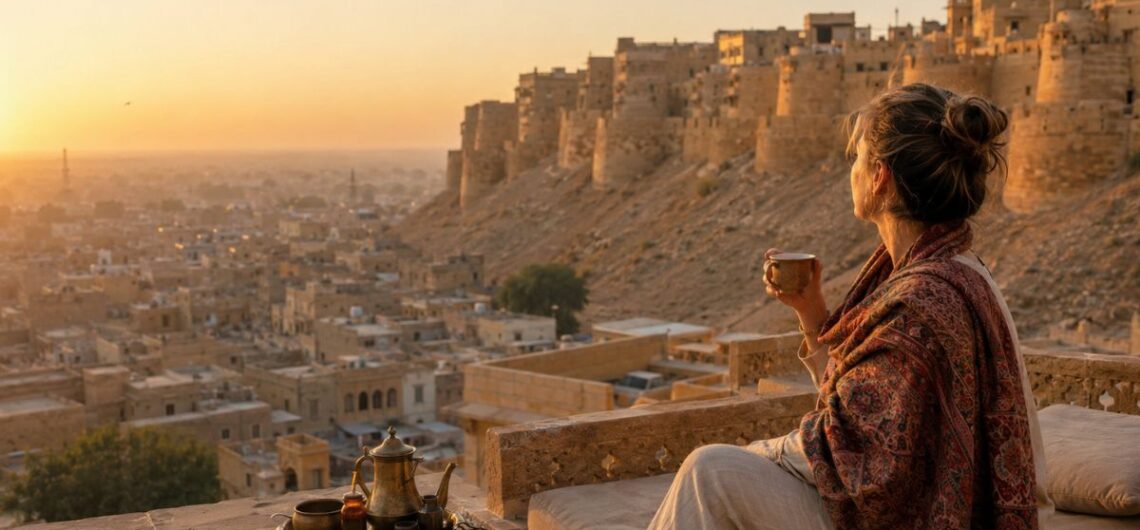
Planning a Rajasthan trip in 2026? Here’s the short answer: October to March is the best time to visit Rajasthan. The weather is cooler, the skies are clear, and every fort, desert, and palace comes alive with tourists, festivals, and golden light. If luxury travel, desert safaris, and comfortable sightseeing are your priority — this window is non-negotiable.
Rajasthan tourism demand is rising sharply in 2026, driven by growing international interest and post-pandemic travel recovery. That means early planning matters more than ever, especially for peak-season hotel bookings and private transport. Explore our curated Rajasthan Tour Packages to find the right fit for your travel style and dates — or consider the iconic Ultimate Classical Rajasthan Tour for a fully structured 13-day experience across the state’s most celebrated destinations.
Road travel between Rajasthan’s cities — Jaipur, Jodhpur, Jaisalmer, Udaipur — is part of the experience. But distances are long, and fuel prices in 2026 have pushed private vehicle costs higher. Smart timing, structured itineraries, and choosing the right season all add up to a better, more affordable journey.
Rajasthan Weather Overview for Best Time to Visit Rajasthan
Rajasthan has three distinct seasons, each offering a different travel experience.
Winter (October to March) is the most comfortable time to visit. Temperatures across the state range from 8°C to 25°C, making sightseeing, camel safaris, and outdoor dining genuinely pleasant. Mornings can be cold — especially in Jaisalmer and Bikaner — but afternoons are warm and clear.
Summer (April to June) is brutal. Temperatures routinely cross 45°C in desert zones like Jaisalmer and Barmer. Indoor heritage tourism is possible, but outdoor exploration becomes challenging. The upside: hotel prices drop, and crowds thin out significantly.
Monsoon (July to September) brings 100–300mm of rainfall, depending on the region. Western Rajasthan sees minimal rain. Eastern areas, particularly Udaipur and Bundi, receive heavier showers that turn the landscape green and romantic. Travel disruptions are occasional but manageable.
| Season | Months | Temp Range | Comfort Level |
| Winter | Oct–March | 8°C–25°C | Excellent |
| Summer | April–June | 32°C–48°C | Poor (outdoors) |
| Monsoon | July–Sept | 25°C–38°C | Moderate |
Best Time to Visit Rajasthan by Season
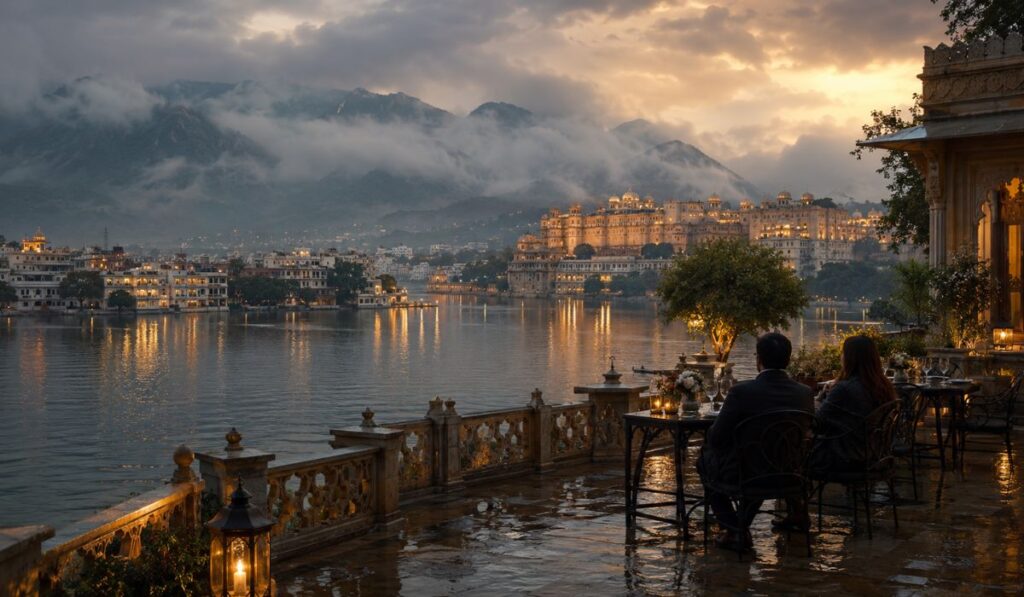
Winter (October to March): Peak Season and the Best Overall
This is the crown jewel of Rajasthan travel. From October through March, the state is fully open for business — culturally, logistically, and climatically.
Sightseeing at Amber Fort, Mehrangarh, and the City Palace is genuinely comfortable during this period. Desert safaris in Jaisalmer reach peak demand in November and December. Photography enthusiasts love the golden morning light over the Thar dunes. International travelers flood in from Europe, the US, and Australia, making this Rajasthan’s busiest and most electric season.
Festivals cluster heavily in this window: Pushkar Camel Fair (November), Jaipur Literature Festival (January), and the Jaisalmer Desert Festival (February) are all world-renowned events that add colour and energy to any itinerary.
For luxury travelers, winter is the sweet spot — five-star heritage properties like the Taj Lake Palace and Umaid Bhawan Palace hit peak rates, but availability and service quality are both at their best. If you want the complete Rajasthan experience — forts, deserts, palaces, festivals — our Rajasthan Tour Packages are designed around this season for maximum comfort and impact.
Summer (April to June): For the Brave Traveler on a Budget
Summer Rajasthan is not for everyone. Once April arrives, temperatures in desert cities climb fast — Jaisalmer regularly crosses 46°C by May, and even Jaipur becomes oppressive by early afternoon.
That said, this season has real advantages. Hotel rates drop by 30–50%, heritage properties run last-minute offers, and the famous crowd crush disappears. Step-wells like Chand Baori and indoor spaces like museum wings and palace interiors are still very much worth visiting — just plan your outdoor time for early morning or after sunset.
Summer works best for domestic travelers on tight budgets who know the terrain and are prepared for the heat.
Monsoon (July to September): Rajasthan’s Hidden Season
Monsoon Rajasthan is surprisingly beautiful — especially in the south and east. Udaipur, often called the City of Lakes, becomes genuinely magical between July and September. The lakes fill up, the Aravalli hills turn green, and the city takes on a romantic, misty quality that no other season replicates.
Ranthambore National Park is closed during peak monsoon for tiger safaris, but the greenery around the reserve is spectacular. Western Rajasthan — Jaisalmer, Bikaner — sees very little rain and remains accessible.
Occasional flash flooding and road disruptions are the main risks. Travel insurance is strongly advised for this period.
Best Month-to-Month Rajasthan Travel Guide
| Month | Weather | Crowd Level | Best For |
| October | Pleasant, 20–30°C | Moderate | Cultural tours, fort photography |
| November | Cool, 15–25°C | High | Luxury travel, Pushkar Camel Fair |
| December | Peak winter, 8–22°C | Very High | Desert experiences, Jaisalmer |
| January | Cold mornings, 8–20°C | High | Sightseeing, Jaipur Lit Fest |
| February | Comfortable, 12–25°C | High | Road trips, Desert Festival |
| March | Warm afternoons, 18–30°C | Moderate | Budget-friendly, last comfort window |
| April | Hot, 28–38°C | Low | Budget stays, indoor heritage |
| May | Very hot, 35–45°C | Very Low | Only for heat-tolerant travelers |
| June | Extreme, 38–48°C | Very Low | Avoid unless necessary |
| July | Monsoon starts, 28–38°C | Low | Udaipur, romantic travel |
| August | Monsoon peak, 28–35°C | Low | Scenic photography, Bundi |
| September | Cooling, 28–35°C | Low–Moderate | Monsoon trails, value travel |
How Rising Fuel Prices Affect Rajasthan Tours in 2026
This is something 2026 travelers need to plan around carefully.
Rajasthan is a large state — roughly 342,000 sq km — and road distances between its headline cities are significant. The Jaipur to Jodhpur stretch runs approximately 340 km. Jodhpur to Jaisalmer is another 290 km. Udaipur to Jodhpur adds 260 km. Most travelers cover 3–5 of these cities in a single trip, meaning total road distances of 1,000–1,500 km are common.
Fuel prices in India have risen notably in 2025–26, and this feeds directly into the cost of private SUV hire and chauffeur-driven vehicles — the standard mode of travel for most international and luxury tourists in Rajasthan. Expect per-day vehicle costs to be 15–25% higher than 2023–24 benchmarks.
The practical implication: book your transport packages in advance and avoid last-minute arrangements, which attract a premium. Choosing a structured tour with bundled transport is often more cost-efficient than piecing together independent vehicle hires across cities.
Best Time to Visit Rajasthan for Different Travelers
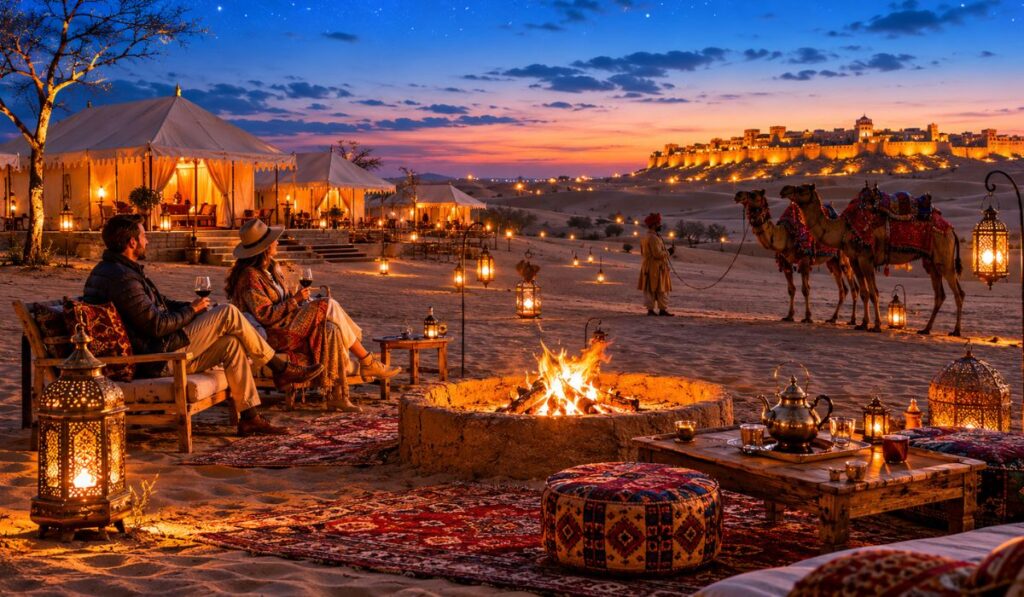
Couples
October to February is ideal. The cool evenings, candlelit palace dinners, and rooftop sundowners over Udaipur’s lakes create a naturally romantic atmosphere. The monsoon season (July–September) is also surprisingly popular with couples seeking something quieter and visually stunning in Udaipur.
Luxury Travelers
November to February is peak luxury season. Heritage hotels are fully staffed, seasonal menus are running, and the property experience is at its finest. Expect to pay top rates — but the quality justifies it. Book at least 3–4 months in advance for December and January.
Families
November to January is the sweet spot. The weather is manageable for children, school holiday schedules in most countries align with this window, and there’s enough festival activity to keep younger travelers engaged. Avoid April through June with children — the heat is genuinely risky.
Photography Enthusiasts
October for the clarity of early winter light. February for the Jaisalmer Desert Festival with its dunes, folk performers, and camel processions. And July–August in Udaipur for moody monsoon light over the lakes. All three periods offer distinct visual opportunities.
Desert Safari Travelers
November and December are peak months for Jaisalmer desert safaris. The dunes are at their most spectacular, the sunsets are vivid, and overnight camping under the stars is genuinely cold and magical. Book safari camps well in advance for this window.
Best Rajasthan Festivals to Experience
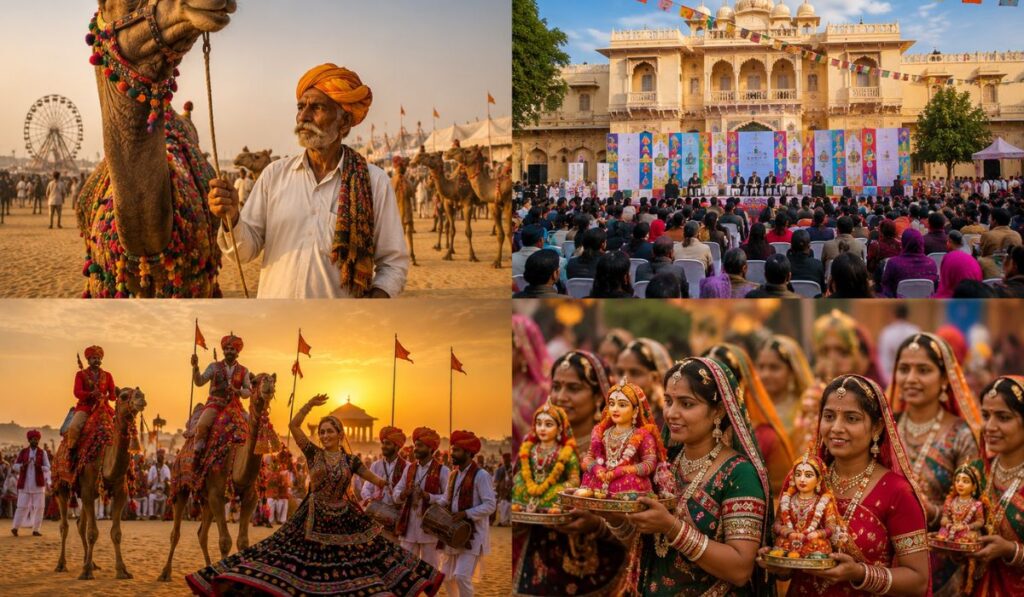
Rajasthan’s festival calendar is one of the richest in India and a legitimate reason to time your trip around specific dates.
Pushkar Camel Fair (November) is one of the world’s largest livestock fairs — camels, folk music, desert acrobatics, and a deeply local atmosphere that most travelers find unforgettable.
Jaipur Literature Festival (January) draws internationally celebrated authors, thinkers, and artists to Diggi Palace. It’s one of Asia’s largest literary events and draws its own travel crowd.
Jaisalmer Desert Festival (February) is built around the Thar dunes — folk dancers, turban-tying competitions, camel racing, and sunset performances. This is when Jaisalmer is at its most cinematic.
Teej (August) and Gangaur (March–April) are local Hindu festivals celebrated with particular vibrancy in Jaipur, offering authentic cultural immersion for travelers willing to plan around them.
Rajasthan Travel Costs in 2026
Rajasthan travel costs vary dramatically by season and travel style.
Winter (peak season): Heritage and luxury hotels charge premium rates. A 5-star heritage property in Udaipur or Jodhpur can run ₹25,000–₹80,000 per night. Mid-range guesthouses in Jaipur and Jaisalmer range from ₹3,000–₹8,000. Private SUV hire across the full golden triangle-plus-desert circuit can add ₹40,000–₹70,000 to a 10-day trip.
Summer (off-season): Hotel rates drop by 30–50%. The same ₹25,000 heritage room may be available for ₹12,000–₹15,000. Transport costs also soften. Backpacker-friendly window.
Monsoon: Mid-tier pricing. Good value for those comfortable with occasional disruptions.
Budget tip for 2026: Flight prices into Jaipur have risen with demand. Booking domestic connections 6–8 weeks out consistently returns better fares. Train travel between cities (Jaipur–Jodhpur, Jaipur–Jaisalmer) remains excellent value and an experience in itself.
Essential Rajasthan Travel Tips
Arriving prepared makes a significant difference in Rajasthan.
Clothing needs to be layered in winter — mornings in Jaisalmer in December can drop to 5–7°C, while afternoons climb to 22°C. A light down jacket and a couple of layering pieces cover the range.
Hydration is critical year-round, but especially in summer and during desert excursions. Carry at least 2 litres of water per person for outdoor sightseeing days, even in winter.
Sunrise timing matters enormously. The light at Jaisalmer Fort, Amer Fort, and Mehrangarh between 6:30–8:30am is unlike anything you’ll photograph later in the day. Plan early starts, especially in November–February.
Desert temperatures at night during the safari season (November–January) drop sharply after sunset. A warm sleeping bag or quality blanket makes the overnight camp experience comfortable rather than miserable.
For peak season travel (December–January), book accommodations at least 2–3 months in advance. Some heritage properties in Udaipur and Jaisalmer fill out for the December–January window by September.
Road journeys between cities are long. Break the Jodhpur–Jaisalmer route at Osian or Khimsar. The drive is beautiful but tiring if done in one stretch.
Suggested Rajasthan Itineraries
The right itinerary depends on how many days you have and which type of Rajasthan experience matters most to you.
For a 7-day focused trip, the classic circuit covers Jaipur, Jodhpur, and Jaisalmer. Enough time to see the major forts and squeeze in a desert safari.
For a 10-day route, adding Udaipur and a stop at Ranakpur or Kumbhalgarh gives the trip a well-rounded feel — desert, palace, lake, and hill fort all in one journey. Our Delhi Agra Jaipur Jodhpur Udaipur Tour is built around exactly this logic, combining Rajasthan’s highlights with the Golden Triangle.
For the complete 13-day experience, the Ultimate Classical Rajasthan Tour covers Jaipur, Pushkar, Jodhpur, Jaisalmer, Udaipur, and the villages in between — the kind of journey that gives you Rajasthan in full rather than in highlights.
FAQs – Best Time to Visit Rajasthan in 2026
Is Rajasthan too hot in summer?
For most travelers, yes. May and June in western Rajasthan regularly hit 45–48°C. Outdoor sightseeing in those conditions is not comfortable or safe for extended periods. Unless you’re on a tight budget and very heat-tolerant, summer is best avoided.
Is winter the best time to visit Rajasthan?
For the majority of travelers — especially international visitors, families, and luxury travelers — yes. October to March offers the most comfortable conditions, the richest festival calendar, and the best overall experience.
Can I visit Rajasthan during the monsoon?
Yes — selectively. Udaipur and eastern Rajasthan are beautiful in the monsoon. Western Rajasthan (Jaisalmer, Bikaner) sees little rain and is accessible. Some road routes and rural areas may face disruption.
Which month is the cheapest to visit?
May and June offer the lowest hotel rates, but the extreme heat is a significant trade-off. October is the sweet spot — weather is turning pleasant, crowds haven’t peaked, and prices are still reasonable.
How many days are enough for Rajasthan?
A minimum of 7 days is needed to feel the state. 10–13 days gives you the depth to visit 4–5 cities without rushing. Anything under 5 days will feel like a highlight reel.
Is Rajasthan good for luxury travel?
Rajasthan is one of India’s finest luxury travel destinations. Its heritage hotels — converted forts and maharaja palaces — offer experiences unavailable anywhere else in the world. Peak season (November–February) is when the luxury experience is fully operational.
Conclusion
The best time to visit Rajasthan in 2026 is firmly between October and March — when the weather is cooperative, the festivals are running, the desert is magical, and the heritage hotels are at their finest. Winter suits luxury travelers, couples, families, and first-time visitors to the state almost universally.
Summer works for budget travelers who know what they’re signing up for. Monsoon works for those drawn to Udaipur’s romantic side and value-season pricing.
With fuel costs and tourism demand both higher in 2026, early planning and structured itineraries offer real advantages over last-minute, ad hoc travel. For a trip that balances comfort, culture, and genuine Rajasthan immersion, explore our Rajasthan Tour Packages — designed around the seasons, the distances, and the experiences that make this state one of the world’s great travel destinations.

Comments