

Last reviewed: August 2026 — Dress and footwear guidance checked against the official Taj Mahal (ASI) Do’s & Don’ts page and current traveler reports from Agra.
Taj Mahal Dress Code: Quick Answer
There is no official Taj Mahal dress code enforced by the Archaeological Survey of India. You won’t be turned away at the gate for wearing shorts or a sleeveless top. But because the Taj Mahal is a mausoleum — the resting place of Mumtaz Mahal and Shah Jahan — modest, comfortable clothing is the practical and respectful choice. Cover your shoulders and knees where possible, wear shoes you can slip off easily, and dress for a lot of walking in the sun. That’s really the whole Taj Mahal dress code in one paragraph. Whichever Taj Mahal tour package you end up booking, the rest of this guide fills in the outfit details you’ll actually need before you land in Agra.
Is There an Official Dress Code at the Taj Mahal?
No. Neither the ASI nor the Uttar Pradesh Department of Tourism publishes a mandatory clothing policy on the official Taj Mahal website. What they do publish is a clear list of prohibited items — food, tobacco, tripods, headphones, chargers, and so on — but nothing about what you must wear.
That gap is exactly why so many travelers search for a Taj Mahal dress code before their trip: the absence of an official rule creates uncertainty, not clarity. Security staff are not checking outfits at the gate. What they are checking is your bag, your ticket, and whether you’re carrying anything on the banned list. So think of dress code guidance here as cultural etiquette and practical comfort advice, not law.
Taj Mahal Dress Code for Women

For women, the safest and most comfortable approach is to cover the shoulders and keep hemlines at or below the knee. Long pants, a maxi dress, or a salwar kameez all work well and hold up for hours of walking across marble and gravel paths.
Practical picks that suit the Taj Mahal dress code for women:
- Loose cotton or linen trousers with a top that covers the shoulders
- A long kurti or tunic over leggings
- A light scarf or dupatta — genuinely useful for sun protection and as a quick shoulder cover if needed
- Flat, closed-toe shoes over heels; the walkways are uneven marble and gravel
Sleeveless tops aren’t banned, but women who wear them sometimes report more stares than they’d like — a minor but real trade-off worth knowing before you pack.
Taj Mahal Dress Code for Men
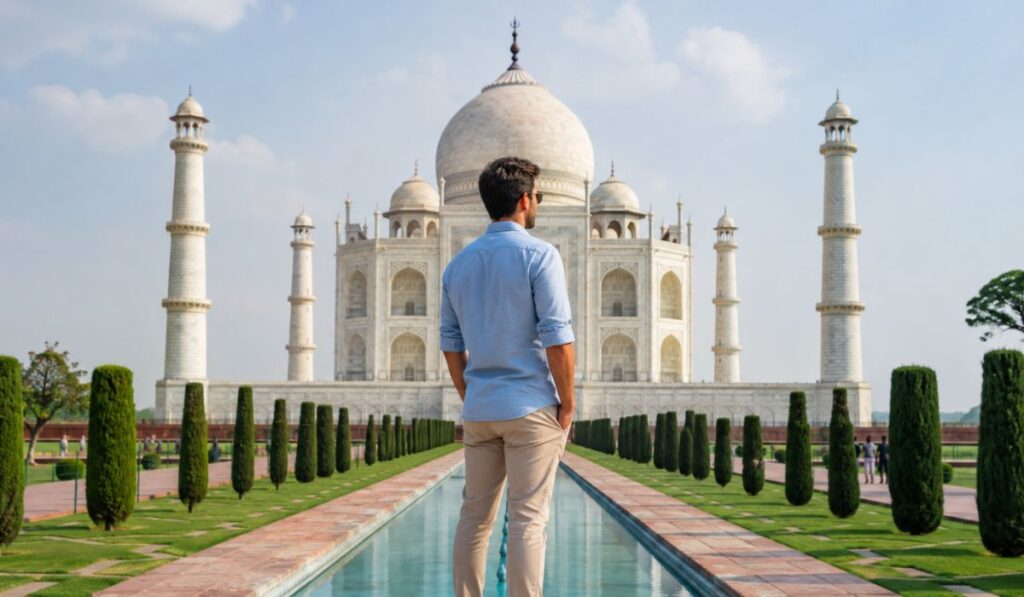
For men, the same logic applies with a bit more flexibility. Knee-length shorts are generally fine and are commonly worn by both foreign and Indian male visitors, especially in summer. Very short shorts draw more attention and aren’t the best fit for a mausoleum visit.
A comfortable Taj Mahal dress code for men usually looks like:
- Knee-length shorts or lightweight trousers
- A breathable cotton shirt or t-shirt
- Closed or slip-on shoes rather than tight lace-ups, since you’ll need to deal with footwear rules inside the main platform
If you’re doing a combined itinerary that includes mosques, forts, or other religious sites the same day, full-length trousers are the more versatile option so you don’t have to change outfits mid-trip.
Can You Wear Shorts to the Taj Mahal?
Yes — shorts are allowed. There’s no rule barring them. Real visitor reports from the Agra tourism forums back this up consistently: knee-length shorts are common for men, and even TripAdvisor’s long-running local discussion threads confirm there’s no enforced restriction. The unofficial guidance most local drivers give is simple: knee-length is comfortable and low-key, very short shorts stand out more than they need to.
If you’re coming from Delhi as part of a longer day, some travelers prefer full-length pants purely for practicality — fewer mosquito bites at dawn, more sun protection at midday, and no wardrobe rethink if your itinerary adds a temple stop.
Are Shoes Allowed at the Taj Mahal?
This is where most first-time visitors get confused, and it’s a separate issue from the Taj Mahal dress code itself. Shoes are allowed throughout the complex. The only restriction is on the white marble platform around the main mausoleum, where you have three options:
- Wear disposable shoe covers — provided free with foreigner, SAARC, and BIMSTEC tickets
- Remove your shoes and go barefoot — many visitors do this, especially at sunrise before the marble heats up
- Carry your shoes in hand or in a small permitted bag while walking barefoot
Domestic Indian visitors don’t get free shoe covers with their ticket, but pairs are available for a small fee (around ₹20) from vendor kiosks near the ticket counters, or from shops near the eastern gate.
One practical tip that rarely makes it into generic guides: the marble genuinely gets hot in the sun. If you’re visiting midday in summer, wear socks under your shoe covers or bring a spare pair — barefoot visitors regularly regret it by mid-morning.
What Not to Wear (and What Not to Carry)
Beyond the Taj Mahal dress code itself, a few practical avoidances will make your visit smoother:
- Skip heavy jewelry — metal detectors at security will flag it and slow you down
- Avoid brand-new shoes — hours of walking on stone paths is not the time to break them in
- Leave large backpacks behind — only small bags are allowed through security; anything bulky adds time at the checkpoint
- No tripods, drones, selfie sticks, or headphones — these are on the official prohibited items list, unrelated to clothing but worth packing around
What to Wear by Season
Your Taj Mahal dress code choices should flex with the season too — what works at a cool sunrise won’t hold up by noon in summer.
Winter (October–March): Mornings are cold, especially at sunrise. Layer up — a light jacket over your outfit works, and you can shed it once the sun is up.
Summer (April–June): Expect 40°C-plus heat. Loose cotton or linen in light colors is far more comfortable than synthetic fabrics, and a hat or scarf helps with sun exposure during the walk from the gate to the mausoleum.
Monsoon (July–September): Light rain is common. A thin, packable rain layer beats an umbrella once you’re moving through security and crowds.
What to Know Before Your Taj Mahal Tour
A few practical basics tie directly into your outfit choices:
- Visiting hours run from roughly 30 minutes before sunrise to 30 minutes before sunset
- The Taj Mahal is closed to general tourists on Fridays
- Carry a government-issued photo ID — passport for foreign nationals
- Water bottles are permitted inside
- Vehicles aren’t allowed within 500 meters of the monument, so plan for a short walk or battery-bus ride from the parking area to the entrance regardless of what you’re wearing
If you’re planning your trip from Delhi and want the logistics — pickup, drive time, ticketing — handled for you, a Taj Mahal day tour from Delhi by car covers the full round trip in a single day, so you can focus on packing the right outfit rather than the transport details.
Dressing for a Sunrise Visit
If you’re planning to catch the Taj Mahal at sunrise — widely considered the best time to visit for both light and lower crowds — dress in layers. Early mornings in Agra can be genuinely chilly even when the afternoon forecast says otherwise, and you’ll want to shed a layer as the sun climbs. Comfortable, slip-on footwear also matters more here since you’ll likely be removing shoes or putting on covers while it’s still dim and slightly rushed near the entrance. Travelers who prioritize this experience often book a sunrise Taj Mahal tour from Delhi, which times pickup around the monument’s exact opening window.
Which Tour Fits Your Trip?
Your outfit plan might also depend on how much time you’re spending in Agra. A same-day round trip from Delhi means dressing for one long day of heat, walking, and travel in a single outfit. If you’d rather split the trip and explore Agra more slowly — including the Taj Mahal, Agra Fort, and local markets without rushing — a Taj Mahal and Agra overnight tour by car gives you two days to plan around, so your daytime outfit doesn’t have to double as your evening one too. For travelers comparing options across multiple visit styles, our full range of Taj Mahal tour packages breaks down car tours, express train options, and premium vehicle choices side by side.
Final Thoughts
The Taj Mahal dress code isn’t a strict rulebook — it’s really a mix of comfort, practicality, and cultural respect. Cover up where it makes sense, wear shoes you can deal with easily at the marble platform, and pack for the season you’re visiting in. Get that right, and the only thing you’ll need to think about once you’re there is how good that first view of the dome actually looks.
Frequently Asked Questions About Taj Mahal Dress Code & Visit Rules
1. Is there a dress code at the Taj Mahal?
There is no clearly published mandatory clothing dress code for general visitors on the official Taj Mahal visitor guidance. For a comfortable and respectful visit, choose modest, breathable clothing that works well for walking and Agra’s weather.
2. Can I wear shorts to the Taj Mahal?
Shorts are not listed among the prohibited items in the official Taj Mahal visitor guidance. Knee-length shorts are a practical option, although lightweight trousers may be more versatile if you are visiting other heritage or religious sites in Agra.
3. What should women wear to the Taj Mahal?
Comfortable trousers, longer skirts or dresses, kurtas, and breathable tops are practical choices for women visiting the Taj Mahal. A light scarf or dupatta can also be useful for sun protection and as an optional shoulder covering.
4. Are shoes allowed at the Taj Mahal?
Yes, visitors can wear shoes in the Taj Mahal complex, but footwear rules apply around the main mausoleum and its marble area. Depending on the ticket category and current arrangements, visitors may need to use shoe covers or remove their footwear.
5. Do I need to remove my shoes inside the Taj Mahal?
Visitors must follow the footwear rules for the main marble mausoleum area. Shoe-cover arrangements vary by ticket category, while shoe racks are also available. Check the latest official visitor information before your trip.
6. What should I wear for a sunrise Taj Mahal tour?
Wear comfortable layers that you can remove as the temperature rises. Choose walking-friendly footwear that is easy to take off and put back on, especially when visiting the marble area around the mausoleum.
7. What should I carry when visiting the Taj Mahal?
Carry your ticket, required identification, phone, water where permitted, and only essential personal items. Avoid large bags and unnecessary belongings because they can increase the time needed for security checks.
8. What is not allowed inside the Taj Mahal?
The official Taj Mahal visitor guidance prohibits several items, including food or eatables, tobacco products, liquor, tripods, drones, knives, and other restricted articles. Visitors should check the latest official rules before entering.
9. What shoes are best for visiting the Taj Mahal?
Choose comfortable walking shoes or sandals that are easy to remove and put back on. You may need to deal with footwear restrictions near the main mausoleum, so comfort and convenience are more important than formal footwear.
10. What should I wear to the Taj Mahal in summer or winter?
In summer, wear loose, breathable fabrics such as cotton or linen and protect yourself from the sun. For winter or sunrise visits, use removable layers because early mornings in Agra can be much cooler than the afternoon.

Comments