
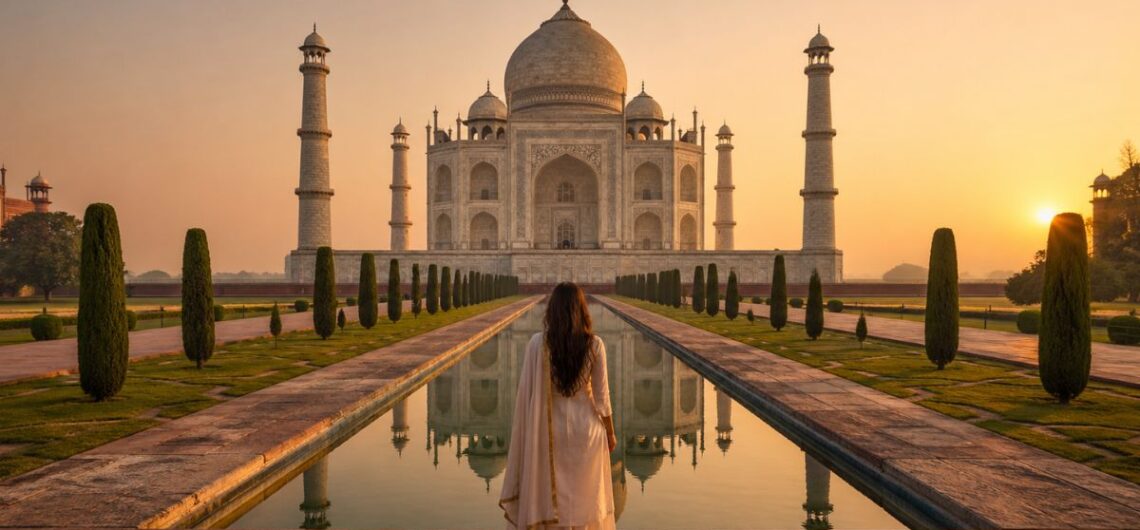
Taj Mahal Tour by Train vs Car: Standing in front of the Taj Mahal is one of those rare, bucket-list moments that actually exceeds the hype. But before you get lost in the beauty of that white marble, you have an important decision to make—how to actually get there from Delhi.
If you’ve been searching for “Taj Mahal Tour by Train vs Car,” you’re likely stuck in a loop of conflicting advice. Should you take the super-fast Gatimaan Express, or sink into the back seat of a private air-conditioned car?
One promises speed and a “local” experience, while the other promises freedom and absolute comfort.
Having organized hundreds of these exact trips, I’ve seen the relief on a traveler’s face when they make the right choice—and the exhaustion when they don’t.
Let’s break down the real differences, beyond the basic travel times, so you can make the right call for your once-in-a-lifetime journey.
Taj Mahal Tour by Train vs Car – Quick Answer
- Train is fastest (≈ 1h 40m – 2h)
- Car is most comfortable and flexible
- Total trip time is similar (10–12 hours)
Train vs Car at a Glance
If you’re in a rush, here’s the bottom line based on your travel style:
- Choose the Express Train if: Your absolute priority is the fastest possible journey time, you’re traveling on a tighter budget, and you’re comfortable navigating some crowds.
- Choose a Private Car if: Your priority is door-to-door comfort, maximum flexibility to stop for photos or food, and a stress-free, personalized experience from start to finish.
For most international travelers wanting a seamless experience, the private car wins by a significant margin. Here’s why.
Taj Mahal Tour by Train vs Car Comparison
| Feature | Express Train (Gatimaan Express) | Private Car (Via Yamuna Expressway) |
| Travel Time (One Way) | Approx. 1 hour 40 minutes | Approx. 3 to 3.5 hours |
| Total Trip Duration | 10–12 hours (door-to-door) | 10–12 hours (door-to-door) |
| Comfort Level | Good, but rigid. You’re confined to your seat. | Excellent and flexible. Your private space, full climate control. |
| Flexibility | Zero. The train doesn’t wait. No photo stops. | Total. Stop for chai, a photo, or a break anytime. |
| Pickup & Drop-off | You must reach the noisy, busy train station yourself. | Door-to-door service from your Delhi hotel/airport. |
| Best For | Solo travelers on a strict budget; pure time-trippers. | Couples, families, first-time visitors, anyone who values comfort. |
The Express Train Experience: Fast, But is it Flawless?
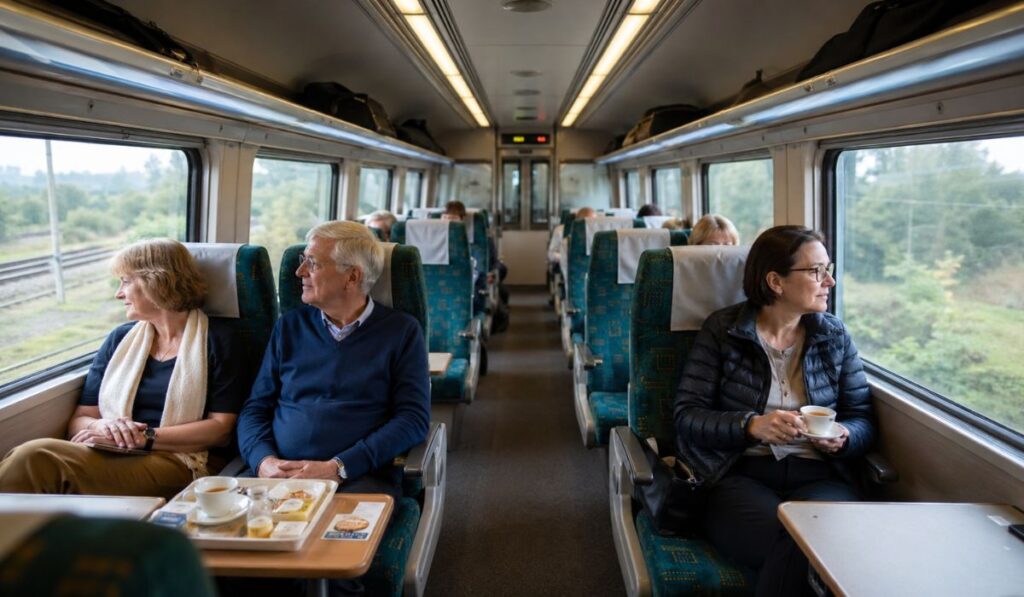
The lure of the Gatimaan Express is undeniable. “Reach Agra in just 100 minutes” sounds like a magic trick, and on paper, it is. This is India’s fastest train, hitting speeds of 160 km/h.
After arriving in Agra, you’ll begin your guided visit to the Taj Mahal. If it’s your first time, here’s a complete Taj Mahal visiting guide to understand entry rules, timing, and what to expect.
A realistic timeline looks like this:
- 06:00 AM: You need to leave your hotel for Delhi’s Hazrat Nizamuddin station. The morning traffic can be unpredictable, so early starts are mandatory.
- 08:10 AM: Train departs. The train is comfortable and breakfast is served on board. This is a genuinely pleasant part of the trip.
- 09:50 AM: Arrive at Agra Cantt station. This is where the glossy experience meets the ground reality. You’ll need to navigate the crowd, fend off persistent touts, and find your pre-booked guide and driver amongst a sea of people offering services.
- 10:30 AM – 02:30 PM: You tour the Taj Mahal and Agra Fort. Your time is governed by the driver’s schedule, often rushed to see additional “recommended” spots.
- 05:50 PM: You’re back at the station for the return train, completely exhausted, navigating the crowd again.
What Most Blogs Won’t Tell You About the Train:
The train itself is a joy. The transitions are not. The stress of finding your platform, managing luggage while boarding, and the chaotic scramble at Agra’s station can be overwhelming.
The air-conditioned coach becomes a distant memory when you step out into the chaos. You haven’t saved total trip time, you’ve just redistributed the stress.
- Pros: Fast moving time, a taste of India’s modern rail system, cost-effective base ticket.
- Cons: Rigid schedule, station chaos, no door-to-door service, zero flexibility.
Thinking the train’s speed is worth it? Check out our seamless Same Day Taj Mahal Tour from Delhi by Express Train where we handle all the logistics, station transfers, and guides so you skip the chaos.
The Private Car Experience: The Art of the Journey
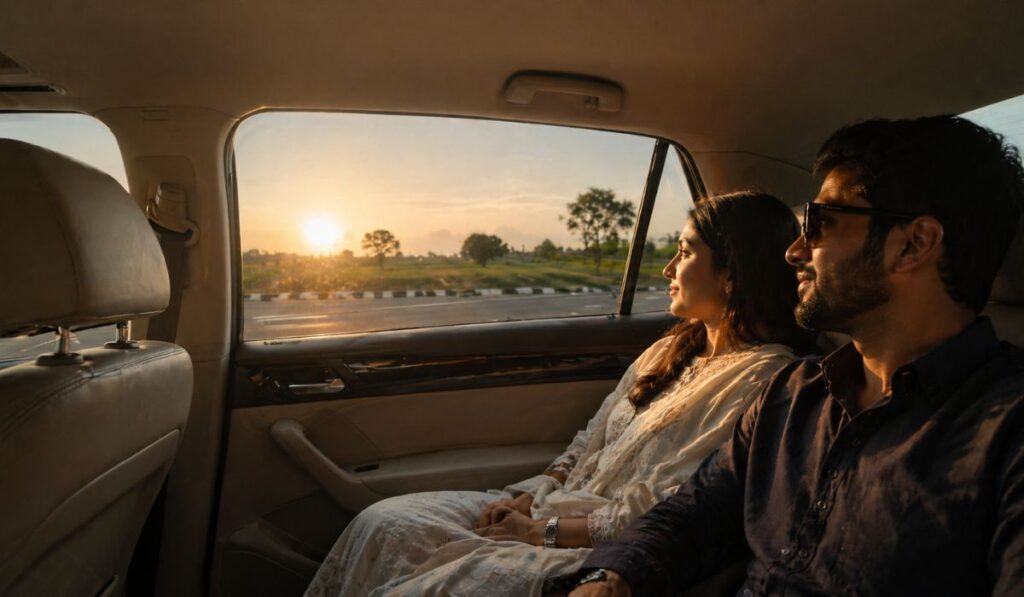
Forget the rigid timetable. A private car tour flips the script, making the journey a part of your adventure, not a logistical hurdle to overcome.
You’re picked up from your Delhi doorstep, let’s say at a civilised 6:30 AM, and you sink into your own space.
A relaxed timeline unfolds like this:
- 06:30 AM: Your driver arrives at your hotel. You load your bags once and forget about them.
- 06:45 AM – 10:00 AM: You cruise on the world-class Yamuna Expressway, one of India’s finest highways. The drive is smooth and visually fascinating. You watch Delhi’s urban sprawl melt into the rustic countryside—mustard fields, small villages, and a changing landscape that’s a movie in itself.
- 09:00 AM: “Driver, can we stop for a real Indian chai?” You take a 20-minute break at a clean, modern roadside restaurant like those run by Haldiram’s. No stress, no missed trains.
- 10:00 AM: You arrive at the Taj Mahal parking lot, fresher and unflustered. Your guide meets you, and you walk to the monument without the post-station cortisol spike.
- 02:00 PM: After a leisurely lunch at a nice restaurant (not a rushed canteen), you get back in your car, recline the seat, and process the beauty you’ve just witnessed. You can sleep, edit photos, or just gaze out the window. If you see a great photo op of rural life on the way back, your driver can slow down.
What Most Blogs Won’t Tell You About the Car:
It’s the unexpected moments that make the car invaluable. The chai break where a local insists you try their shop’s samosa.
The photo stop when the morning light hits a mustard field perfectly. The ability to deviate to a clean washroom whenever you need. This is control, and control is the ultimate luxury in travel.
- Pros: Ultimate comfort and flexibility, door-to-door service, personalized pace, less physically fatiguing.
- Cons: Longer time physically in the vehicle, higher cost.
Want the ultimate, stress-free experience? See why our most popular option is the Taj Mahal Day Tour from Delhi by Car . It’s a chauffeured experience designed entirely around you.
A Real Talk on Cost (Value vs. Price)
Let’s be frank about the costs in Indian Rupees. A basic train ticket on the Gatimaan Express costs around ₹1,500–₹1,800 for a standard chair car seat.
When you add a dedicated taxi for the day in Agra, a good guide, and entry fees, a cheaply assembled train tour might total ₹6,000–₹8,000 per person.
A fully organized private car tour from a reputable company, including highway tolls (which are steep), taxes, a luxury car, a top-tier guide, monument fees, and a nice lunch, typically starts from ₹12,000 per person.
You’re not just paying for a car. You’re paying for:
- A vetted, safe driver who won’t take you to commission shops.
- A historian-level guide, not just a script-reader.
- Zero hidden surprises.
- Peace of mind.
With the train, the base is cheap, but the hidden costs—both financial and emotional—add up quickly.
What Most Blogs Won’t Tell You: The Unseen Factors
This is the stuff first-time visitors often overlook.
1. The Fatigue Factor
The train trip, with its early starts, station battles, and forced marching pace, leaves you significantly more drained.
You’ve seen the Taj, but you feel like you’ve survived it, not savored it. The car trip introduces a more manageable, rolling kind of fatigue—much easier to recover from.
2. Stress vs. Serenity
Your trip to the Taj Mahal should have a prelude of building excitement, not one of anxiety. The car offers a smooth, cinematic visual entry into Agra.
The train delivers a jolt of reality the moment you exit the coach. If you’re visiting India for the first time, the train station can be a baptism of fire that ruins your mood for the monument.
3. The “Lunch Test”
On a train schedule, you often get funneled into a generic, overpriced restaurant near the station or monument for a rushed meal.
With a car, your guide can take you to a hidden gem or a quality restaurant you’d never find on your own, where you can sit for an hour, decompress, and reflect.
Your Fears, Addressed on Taj Mahal Tour by Train vs Car
“Isn’t the train is the fastest way?”
On the track, yes. In a door-to-door, real-world scenario, the total time is identical (10-12 hours).
The train saves you no meaningful time—it just breaks the journey into more stressful segments.
“Is a long car journey in India safe?”
On the Yamuna Expressway, absolutely. It’s a modern, divided, 6-lane controlled-access highway.
When you book with a reputable company that employs trained, professional drivers (not just a random taxi), it’s incredibly safe.
“What about traffic jams or fog delays?”
Fog in winter (Dec–Jan) can delay trains by 4-6 hours. A train stuck in fog is a metal box you can’t leave.
A car in fog on the expressway can at least pull into a service station for a hot drink. Both are weather-dependent, but a car gives you agency.
“Which is truly less stressful?”
Hands down, the private car. You control the environment, the temperature, the music, and the stops.
You never have to drag luggage over a footbridge. For anyone with mobility issues, anxiety, or simply high standards for their holiday, this is a no-brainer.
Who Should Choose What?
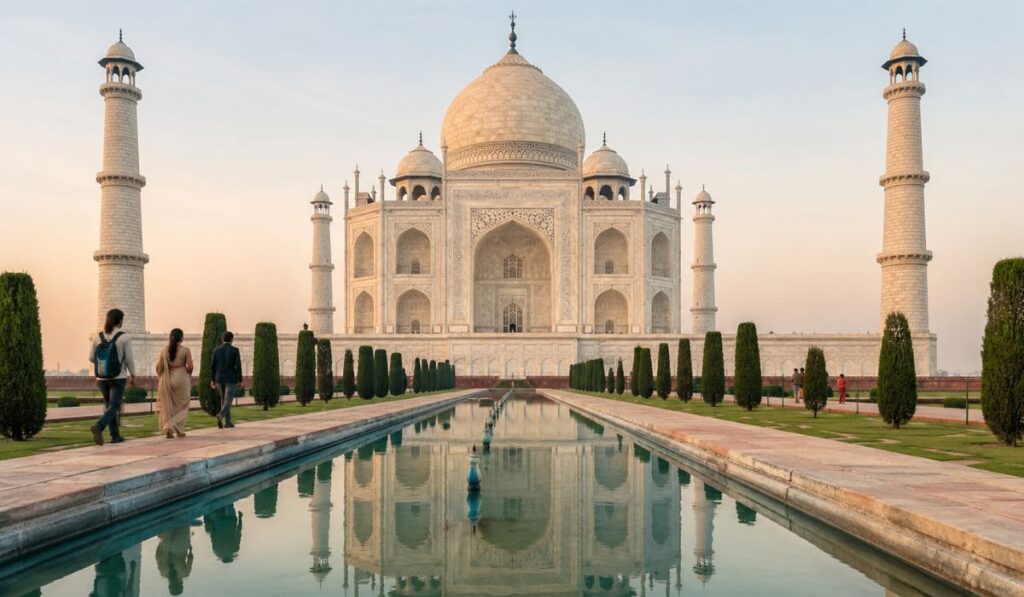
This isn’t about one being universally “better”—it’s about which is better for you.
Choose the Express Train if:
- You are a hardcore budget traveler who counts every dollar.
- You are a solo traveler who finds energy in navigating crowds.
- You have a specific fascination with Indian railways.
- You don’t mind a lack of personal space.
Choose the Private Car if:
- You are traveling as a couple or with family (especially with kids or older parents).
- This is your first time in India and you value comfort and safety.
- You want to transform the travel day from a commute into an experience.
- You value privacy, flexibility, and a door-to-door service above strict speed on rails.
Expert Recommendation: A Strong Opinion
After years of hearing feedback from travelers, here is my direct advice: Take the car.
The train, while impressive technologically, is a compartmentalized comfort bubble between moments of high-intensity travel chaos.
The Taj Mahal deserves your full, mindful presence. You can’t give it that when you’re still decompressing from the battle of Agra Cantt station.
A private car wraps your entire day in a controlled, serene, and personalized bubble. You arrive at the Taj’s gates not frazzled, but full of anticipation.
The journey becomes a delightful part of your travel story, filled with what you saw and discussed, not what you endured.
For a journey that is supposed to be about love and beauty, choose the mode of transport that matches that sentiment: peaceful, beautiful, and effortless.
The Final Verdict for Taj Mahal Tour by Train vs Car
Don’t let a rigid timetable steal the magic from your once-in-a-lifetime trip. While the train might seem like a quick fix on paper, the door-to-door reality is a tie in total time, with the car offering a landslide victory in comfort, control, and peace of mind. The small premium you pay for a private vehicle returns an enormous dividend in the quality of your memory.
Explore Your Perfect Taj Mahal Experience
Your choice of transport defines your experience. Whether you still feel the train’s speed is for you or you’re sold on the comfort of the car, we’ve perfected both experiences to ensure they are seamless, insightful, and unforgettable.
- Browse all our curated journeys on our main Taj Mahal Tour Packages page.
- See the details of our carefully managed train experience: Same Day Taj Mahal Tour from Delhi by Express Train .
- Discover our most popular and relaxing private journey: Taj Mahal Day Tour from Delhi by Car .
FAQs – Taj Mahal Tour by Train vs Car
1. Is the Taj Mahal tour by train really faster than a car?
The train’s moving time is faster (1h 40m vs 3h+). However, the total trip time from your hotel in Delhi and back is exactly the same at 10-12 hours for both options, due to station transit and waiting times.
2. Which option is better for a family with children or elderly parents?
A private car is far superior. It offers door-to-door service, climate control, private space for naps, and the ability to take unlimited comfort breaks. Navigating a packed train station can be very difficult and stressful for vulnerable family members.
3. Are there clean toilet stops on the car route from Delhi to Agra?
Yes, absolutely. The Yamuna Expressway has several modern, well-maintained service plazas with hygienic, Western-style restrooms. Your driver can stop at these whenever requested.
4. Can I book a train tour that still handles all the transfers for me?
Yes. While you can’t escape the train itself, a fully organized train tour like the one we link to includes a driver to drop you at the station in Delhi, and another dedicated private car and driver waiting just for you in Agra to seamlessly take you to the monument and back.
5. Is the Yamuna Expressway safe for a private car journey?
Very safe. It’s a modern, 6-lane, access-controlled toll road connecting Delhi and Agra. It is widely considered one of the safest and best highways in India, driven by professional chauffeurs daily.
Updated for 2026 travel conditions

Comments